Showing posts with label Teaching Ideas. Show all posts
Showing posts with label Teaching Ideas. Show all posts
Thursday, August 4, 2016

Tuesday, August 2, 2016
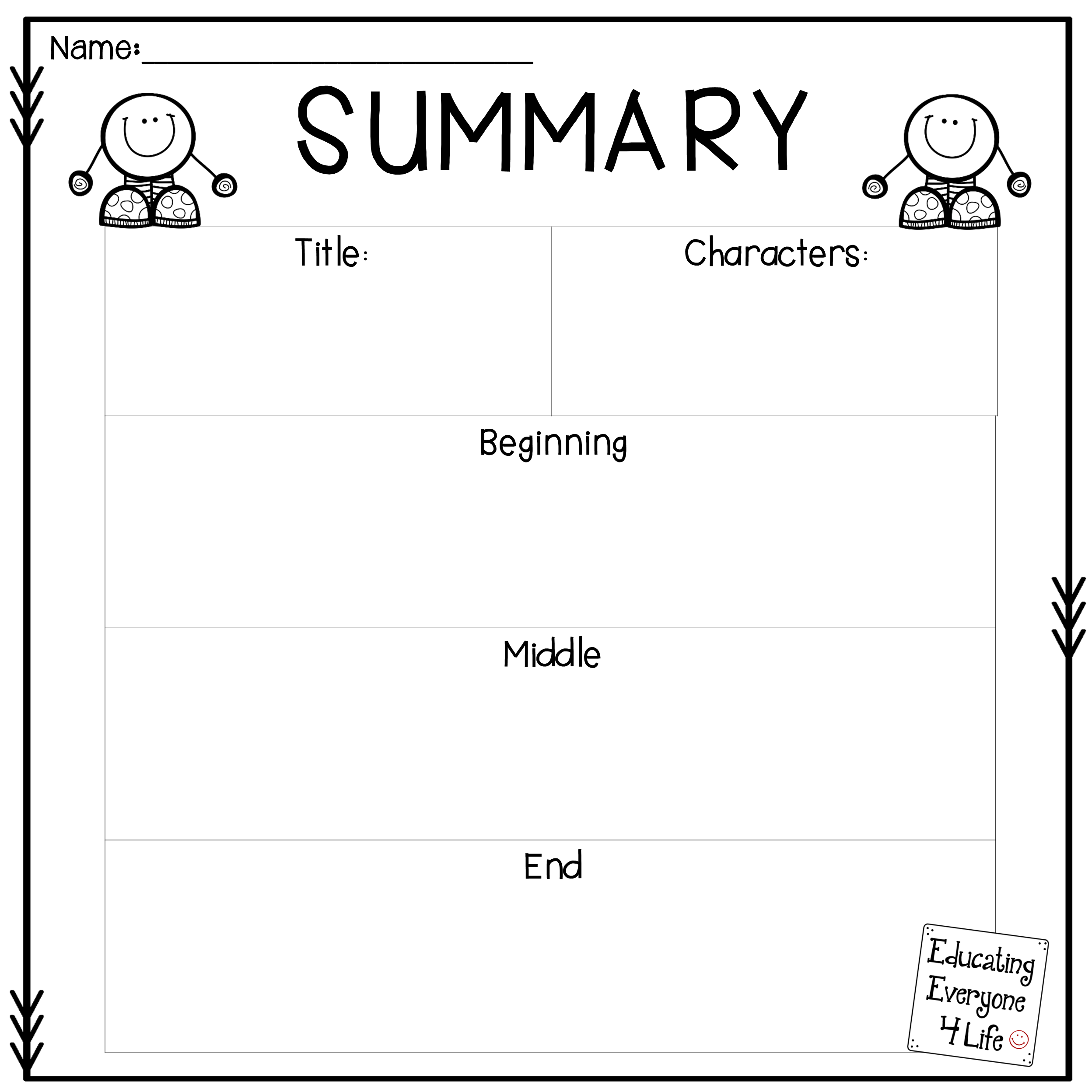
Develop Literacy Skills With Reading Write-Ups
Are you looking for reading activities to help your students develop their reading comprehension skills? Reading Write-Ups are a great way to help students develop and improve their literacy skills!
Click Here To Download These Reading Write - Ups

I love to laminate the pages in this resource, and I let my students use dry erase markers during their reading time and during our literacy station rotations.
Visit Me At: Educating Everyone For More Ideas and Freebies!

Sunday, October 11, 2015
Social Skills
TEACHING SOCIAL SKILLS
Social skills play
an important role in determining a child’s
future success in education.
Children who have good social skills learn how to act and react
in certain situations. Social skills enable children to know what is
expected of them in diverse settings, how to make good choices, and how to
treat others in an appropriate manner. Children develop their social
skills from interactions with others and everyday life situations, but it is
important that as educators we teach and reinforce our student’s social skills.
The Results for children who have been taught and who have learned appropriate
social skills can have a positive impact on life. For example, children
who have learned appropriate social skills from their parents and teachers are
more likely to earn a high school and college degree. They are more
likely to have a full time job. The research conducted by Pennsylvania
State University, has proven that social skills can impact the likelihood of a
child living in public housing as an adult or if they will be in a detention
center or arrested as adults. As teachers, it is critical we help our children
become productive individuals as an adult. We can start teaching our
children positive behavioral skills at a very early age.
It is helpful as an educator to
understand the types of social skills we should teach in the classroom.
We can classify the types of social skills to teach into three basic groups.
Survival skills – Survival skills include listening skills,
ignoring distractions, speaking nicely, or positive self talk.
Interpersonal skills- Interpersonal skills include getting along with others, playing with others, sharing, participating in activities, and taking turns.
Problem Solving skills (Conflict Resolution)-
Problem solving skills include apologizing, accepting the consequence
of an action, making good choices, and asking others for help.
One tool I use for teaching social skills is a Social Skills Interactive Notebook.

The students create a personalized notebook using the social skills that the child needs to learn.
Here are some examples the notebooks we create in my classroom:


https://www.teacherspayteachers.com/Product/Interactive-Notebook-Social-Skills-1761069
Wednesday, August 19, 2015
Back To School Tips For The Special Education Classroom
Special Education Back To School Tips
It's that time of year again! Transitioning from the relaxing summertime freedom to the busy school year can be stressful. I have put together a few tips and tricks that I use in my classroom, and I want to share them with you. I wish you all a wonderful school year!
Review and Understand Your Student's Individualized Education Plan
The IEP is the essential element in the special education classroom. When reviewing your the IEP's for your students:
Another routine I use in my classroom is an attention grabber. If I am ready to teach a lesson and the children are working independently, on the computer, or in a center, I simply state, "Hands on shoulders, eyes on me."
As simple and silly as this may sound, you have the children's attention immediately and they are not fidgeting and playing. They are listening. It works. I promise.

It's that time of year again! Transitioning from the relaxing summertime freedom to the busy school year can be stressful. I have put together a few tips and tricks that I use in my classroom, and I want to share them with you. I wish you all a wonderful school year!
Review and Understand Your Student's Individualized Education Plan
The IEP is the essential element in the special education classroom. When reviewing your the IEP's for your students:
- Make sure the IEP is current
- Check for accuracy
- Look for special needs that may be important in order for the child to be successful.
- Understand accommodations and modifications
- Take note of important meeting dates
- Review your students level of performance
Establish Rules
I am a fan of Fred Jones and his classroom management techniques. Through experience I have found that having a few rules in the classroom is really all you need. In my classroom, I have two rules.
1. Be Responsible - This rule includes things like: completing assignments, cleaning up work area, having supplies ready for class, etc.
For example, if I have a child who did not complete his assignments, I can ask him, "Are you being responsible?"
2. Be Respectful - This rule includes thinks like: How you treat others, how you treat yourself, how you treat adults etc.
For example, if I have a student who is not sharing, I can ask him,"Are you being respectful?"
Believe it or not, this has worked for me throughout my many years of teaching.
Establish Routines
I spend the first week or two of school focusing on my classroom expectations and routines. I have routines for everything. The students know what to do the minute they walk into my classroom.
I have a work-box waiting on them in the same spot everyday. They walk over to the shelf, grab their box, and begin working on their assignment. This allows me time to take care of anything that I may need to handle before I start focusing on my daily objective. It also keeps the students focused and on task. Therefore, behavior issues rarely occur.
Another routine I use in my classroom is an attention grabber. If I am ready to teach a lesson and the children are working independently, on the computer, or in a center, I simply state, "Hands on shoulders, eyes on me."
As simple and silly as this may sound, you have the children's attention immediately and they are not fidgeting and playing. They are listening. It works. I promise.
Communication
Communication is so important as a special education teacher. It is important to communicate with parents to understand their expectations for the school year.
One way I communicate with parents at the first of every school year is by using parent surveys. I send a survey home with the student. It is important to know and understand the parent's view of the child. We are teaching the thing that is most important in their life. If we take time to build positive relationships with parents it really does help the child.
Communication with the general education teacher is also critical. It is important that the general education teachers and special education teachers work together. We quickly learn in our line of work that we have to be flexible and understanding. It really does take a team to make each child successful.
Communication with students is also very important. Children need to clear understanding of the teacher's expectations.
Provide Students Choices
In my classroom, I allow students to have choices. I have a reward system called "Activity of Choice." When a student completes an assignment or has earned a positive incentive I allow them to choose an activity. They can choose to get on the computer, play an educational game, read a book, etc. This is a FREE reward system that students will work very hard to earn.
I hope these tips and tricks will help you this year! I admire each and everyone of you for the job you do!

Sunday, July 26, 2015
Classroom Rules

Are you looking for ways to help create a positive learning environment in your classroom?
Clearly defined expectations are a critical component to a successful classrooms. When children understand the expectations of the classroom, they will be more engaged with academic task. Student achievement will continue to flourish inside your classroom when they are provided with consistent rules and expectations.
During the first week of school we practice, practice, practice the rules and expectations.
We read our "I can expectations" together.


I model rules and then we role play the rules!
We also create a book all about the rules. When a student needs a friendly reminder about a specific classroom rule, we reread our rule books together.


Teaching the children the rules and expectations at the beginning of the year helps to keep our classroom engaged and focused on academic achievement!
Click here to view these Classroom Rules in my Teachers Pay Teachers Store:
https://www.teacherspayteachers.com/Store/Educating-Everyone-4-Life
Thursday, February 19, 2015
FREE SOCIAL STORY - Blurting Out
Do you have students who need help learning the classroom rules? I have created a social story for the children in my classroom who need extra practice. I would love to share this social story with you.
Just click on the link below the picture to download this "Blurting Out" Freebie!
Click here to download this FREE Social Story:
Subscribe to:
Posts (Atom)